.webp)
Jupiter MetricEngine
For configurable, science-grounded metrics tailored to your business
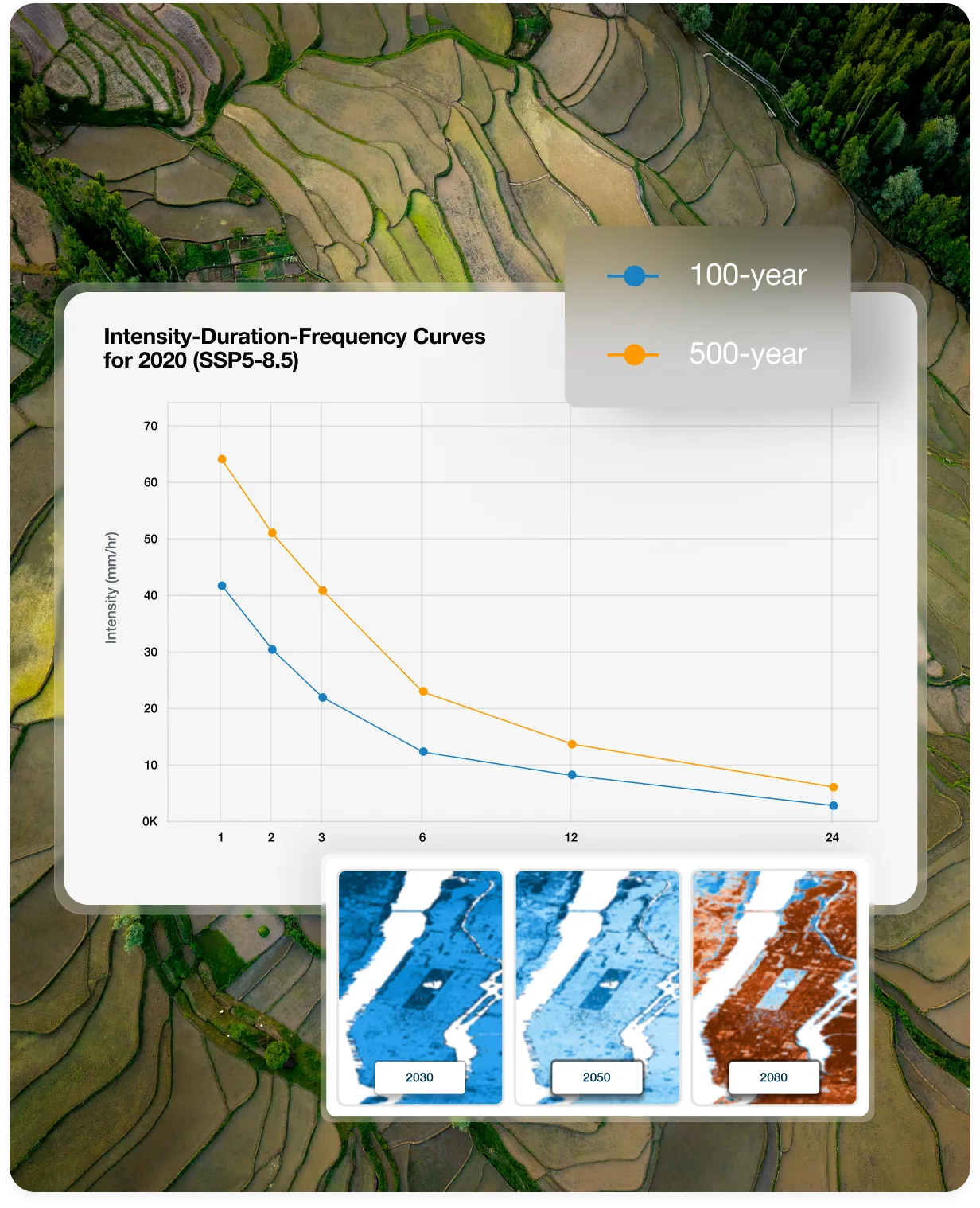
Create the unique indicators your models require
Build custom indicators that align directly with your credit, pricing, capital planning, or stress testing needs — whether you need to quantify right-tail loss, define specific heat thresholds, or construct bespoke extreme event indicators.
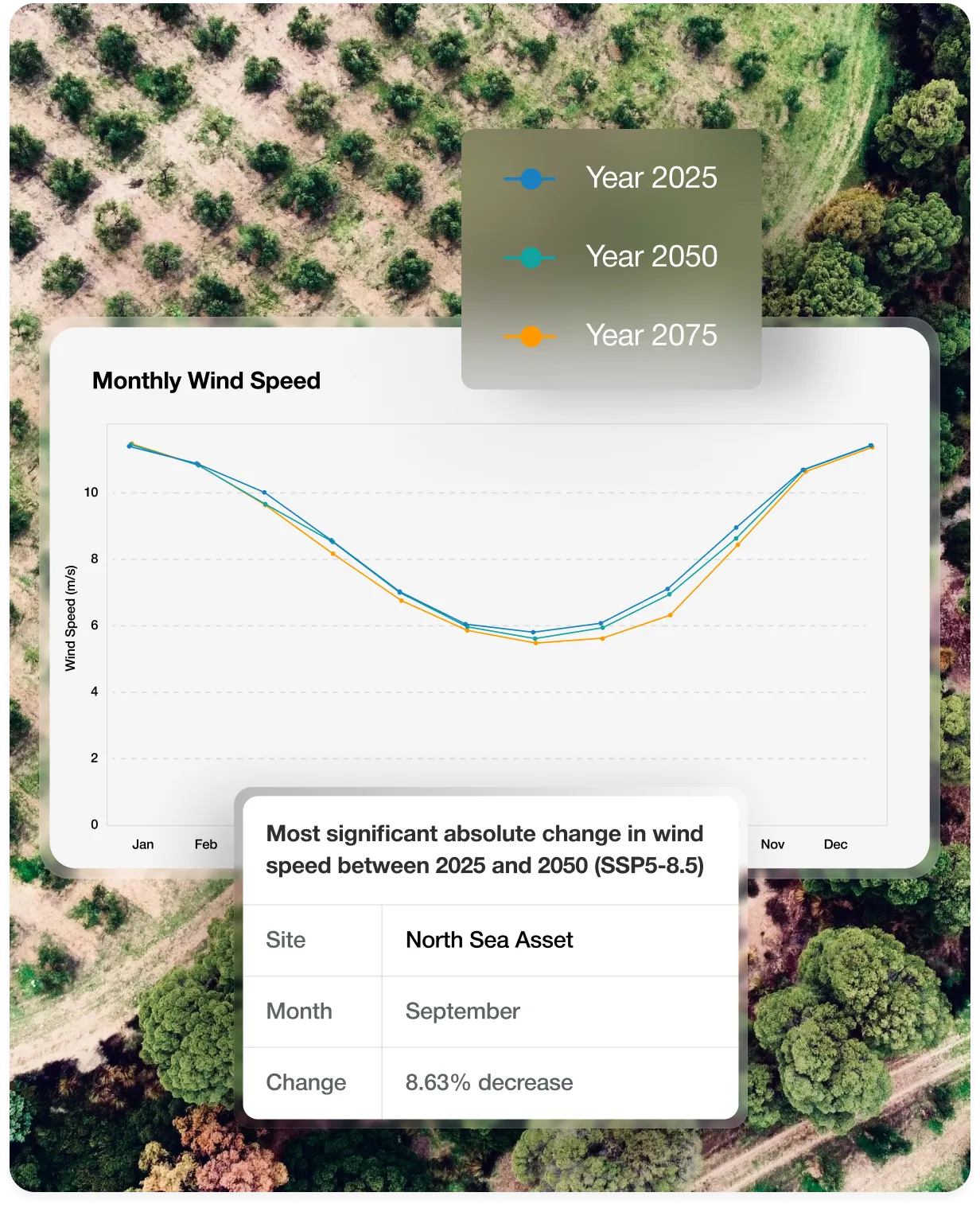
Translate future conditions into quantitative business signals
MetricEngine draws from Jupiter’s deep library of daily climate projections to deliver scenario-specific time series and probability distributions. Model conditions across decades and evaluate how changes in climate variability influence operational risk, loss potential, and financial performance.
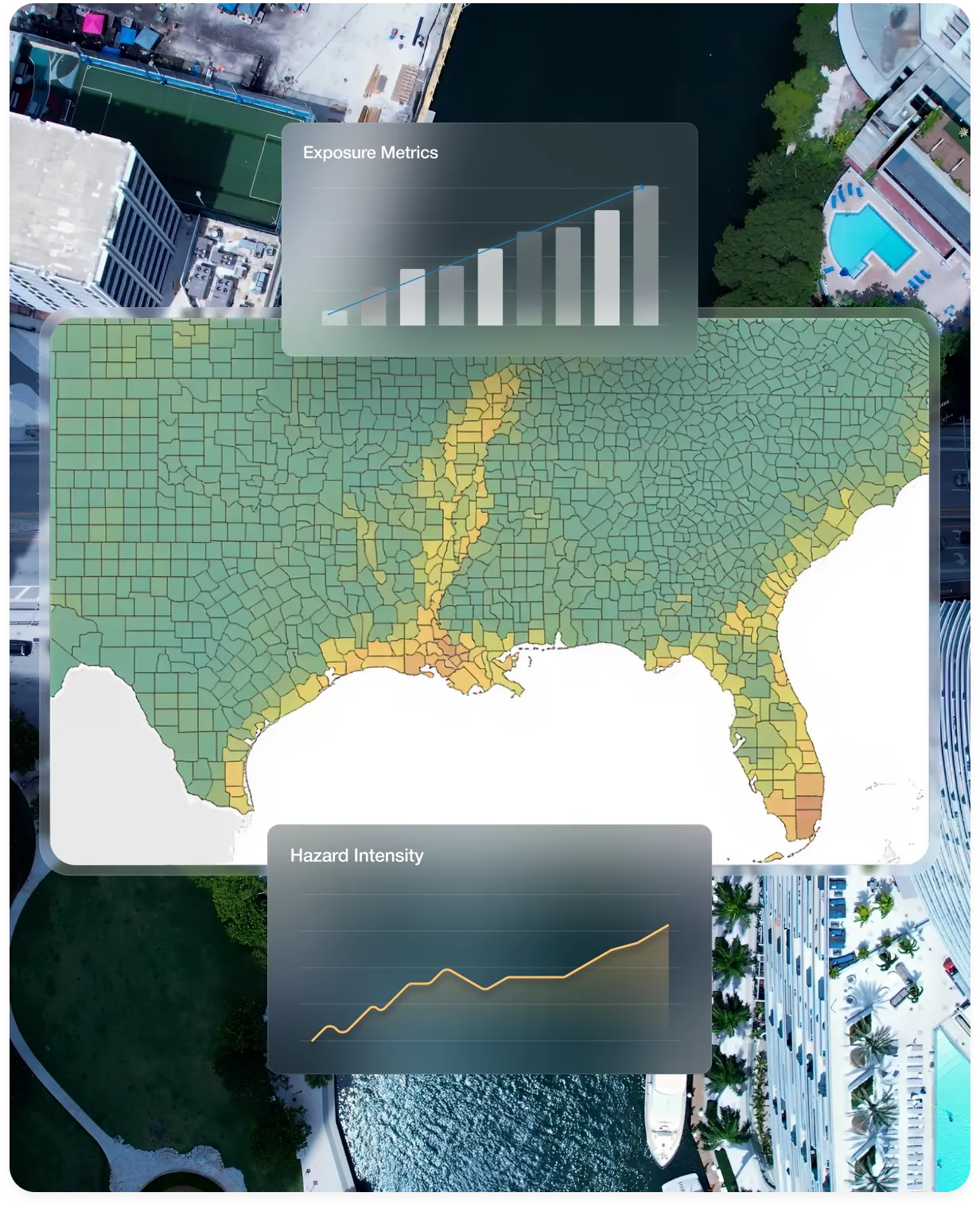
Construct return periods and loss curves for physical risk-driven extremes
Get calibrated insight into extremes, flood behavior, and regional exposure at any scale. Targeted Flood Analytics reduce uncertainty with multi-resolution flood modeling, from portfolio snapshots to facility-level depth and severity. Regional Indexing aggregates risk across flexible boundaries to support exposure analysis where asset-level data is limited.
Use cases

Run forward-looking scenarios that align with regulatory expectations and reveal how extreme events influence liquidity, losses, and capital needs.

Quantify multi-peril exposure across assets and portfolios with transparent, audit-ready methods that strengthen enterprise risk frameworks.

Evaluate how climate-driven shifts affect valuation, performance, and long-term asset strategy — and identify where to rebalance early.

Screen acquisitions, loans, and insurance decisions with scenario-aligned insights into future risk, operational disruption, and insurability.

Understand how physical risk exposure may reshape future cashflows, discount rates, and long-term asset value across sectors and geographies.

Inform strategy, governance, and investor communication with clear physical risk-adjusted performance signals and defensible narrative support.

Model adaptation strategies — from site-level retrofits to infrastructure upgrades — using avoided loss and ROI to guide capital planning.

Identify vulnerable suppliers, transport corridors, and logistics nodes, and benchmark resilience across global value chains.

Prepare consistent, defensible reporting aligned with ISSB/IFRS, CSRD, TCFD, OSFI, PRA, ECB, and other global mandates.
%20(1).webp)
.webp)
.avif)