.webp)
Jupiter Compliance Hub
For streamlined, defensible climate risk disclosure
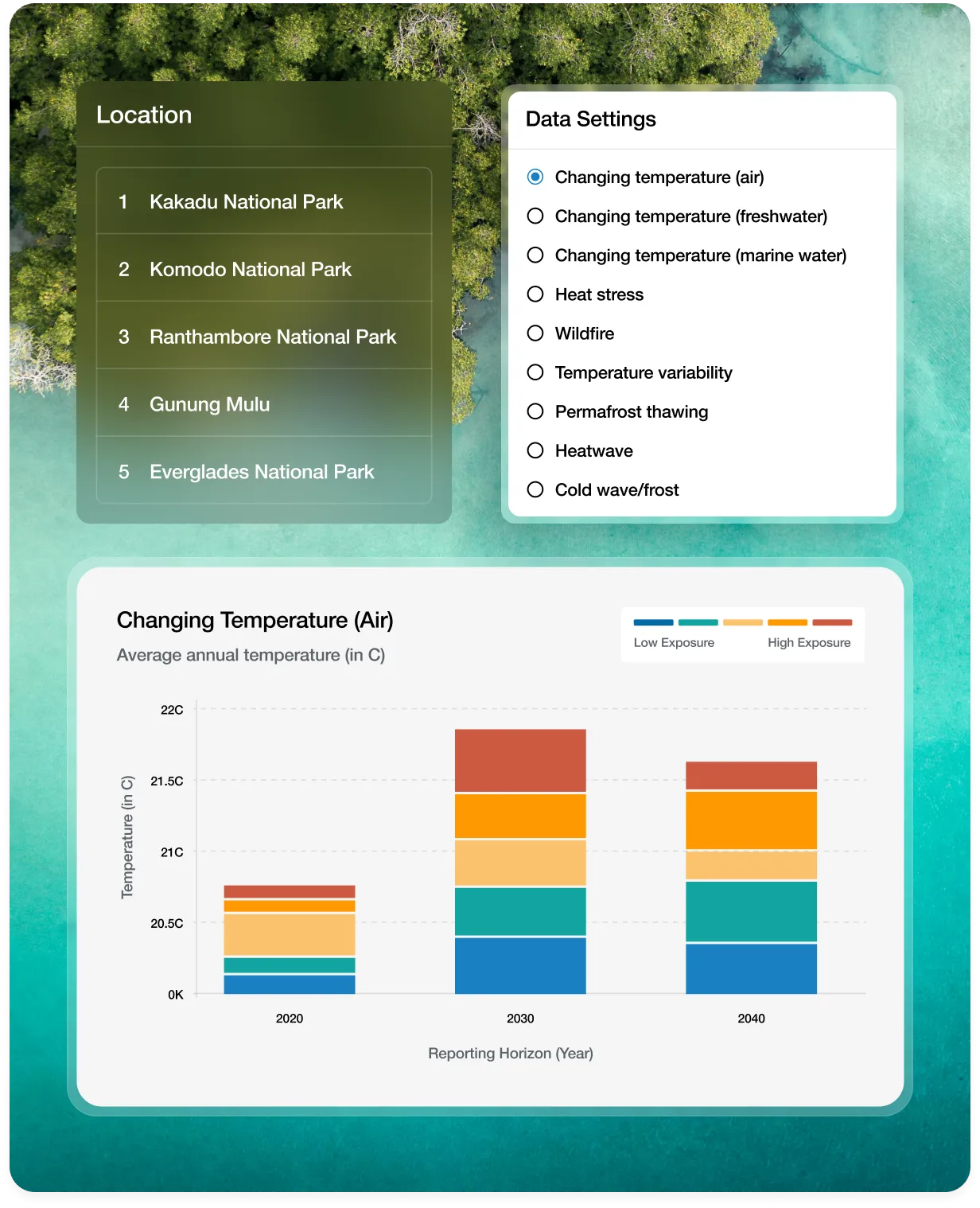
Meet global disclosure mandates with clarity and consistency
Compliance Hub gives you the high-resolution metrics, IPCC-aligned scenarios, and structured workflows you need to manage a growing list of climate mandates. Prepare disclosures accurately and on time.
Navigate evolving mandates without rebuilding your approach
Determine which risks are material, quantify exposure across portfolios, and generate documentation that aligns with regulatory definitions and assurance requirements.

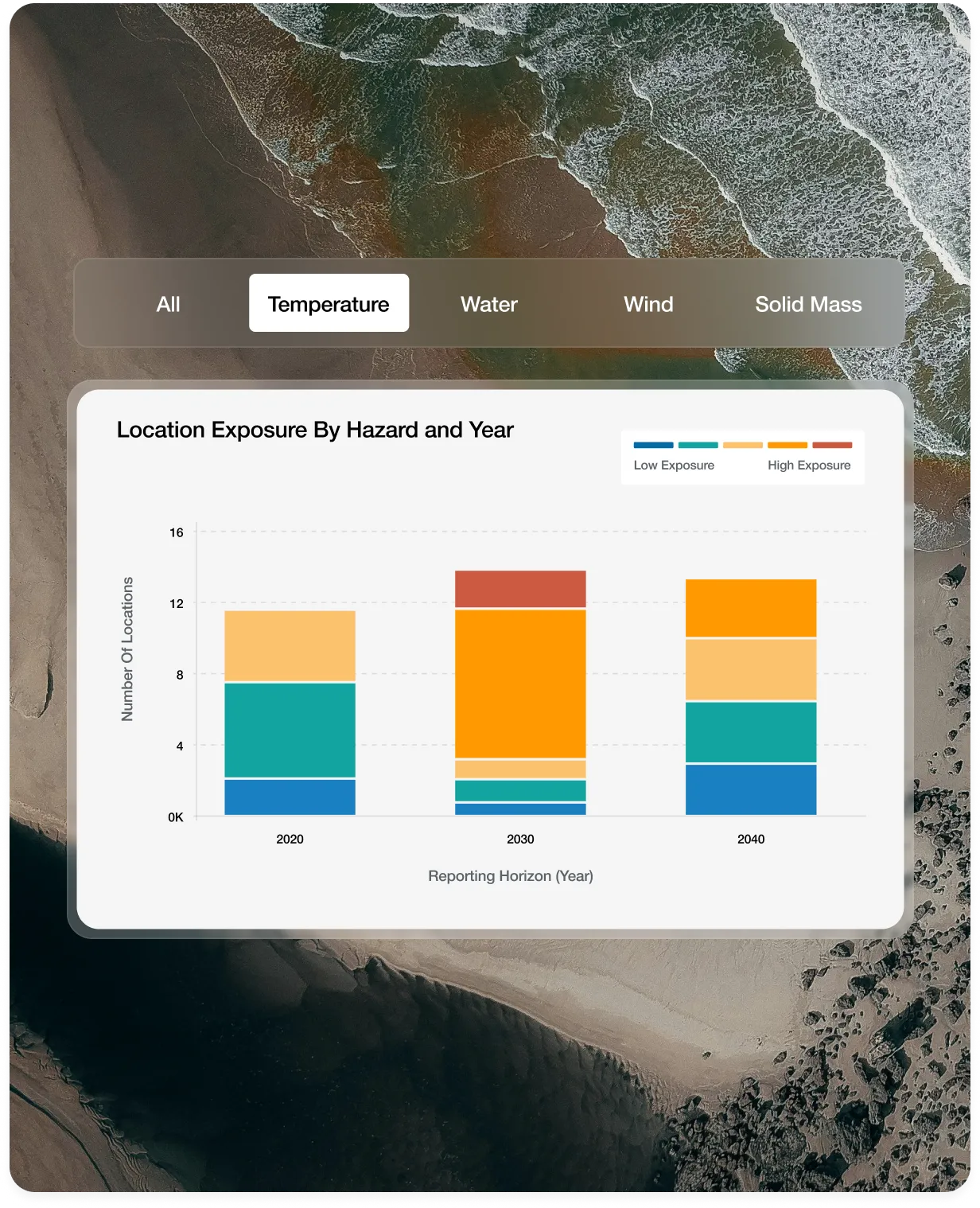
Simplify one of today’s most complex sustainability standards
The CSRD requires companies to disclose the financial impacts of physical climate risk and complete a double-materiality assessment. Compliance Hub streamlines this process with relevant hazard-screening (incorporating all the CSRD’s required peril metrics), scenario-aligned analysis, and structured outputs for ESRS-E1 reporting.
Use cases

Run forward-looking scenarios that align with regulatory expectations and reveal how extreme events influence liquidity, losses, and capital needs.

Quantify multi-peril exposure across assets and portfolios with transparent, audit-ready methods that strengthen enterprise risk frameworks.

Evaluate how climate-driven shifts affect valuation, performance, and long-term asset strategy — and identify where to rebalance early.

Screen acquisitions, loans, and insurance decisions with scenario-aligned insights into future risk, operational disruption, and insurability.
Understand how physical risk exposure may reshape future cashflows, discount rates, and long-term asset value across sectors and geographies.

Inform strategy, governance, and investor communication with clear physical risk-adjusted performance signals and defensible narrative support.

Model adaptation strategies — from site-level retrofits to infrastructure upgrades — using avoided loss and ROI to guide capital planning.

Identify vulnerable suppliers, transport corridors, and logistics nodes, and benchmark resilience across global value chains.

Prepare consistent, defensible reporting aligned with ISSB/IFRS, CSRD, TCFD, OSFI, PRA, ECB, and other global mandates.
.webp)
%20(1).webp)