Toward a new understanding of quantifying climate risk

Featured


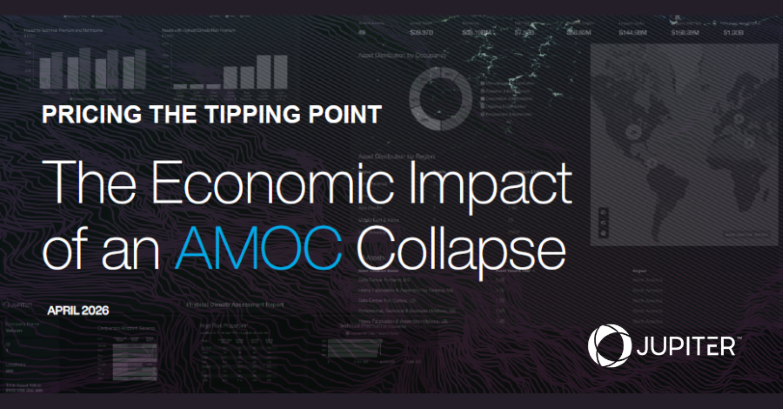
[Report] Pricing the Tipping Point: The Economic Impact of an AMOC Collapse
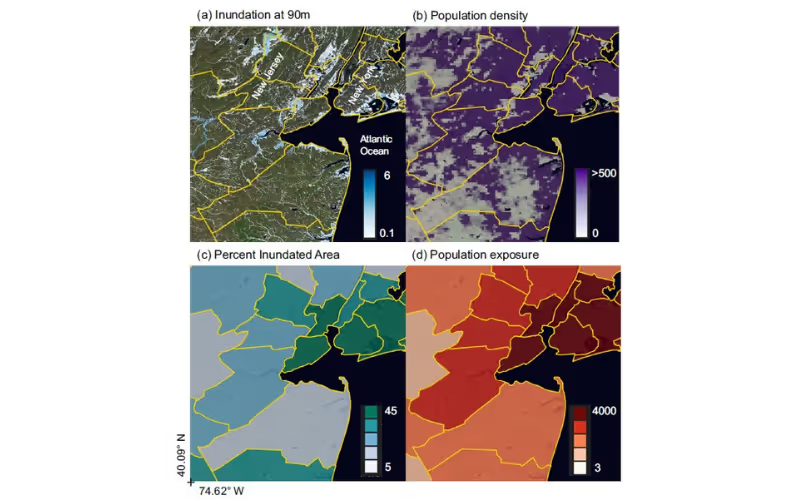
Evidence is growing that the Atlantic Meridional Overturning Circulation (AMOC) may be approaching a tipping point that, if reached, could lead to an abrupt collapse by the mid-21st century. This low-probability but high-consequence event is projected to cause a non-linear surge in sea levels along the U.S. East Coast, resulting in a systemic financial shock that doubles expected flood exposure in major metropolitan areas.


The New Benchmark: What the GRESB Standard Actually Requires on Physical Climate Risk
Four structural changes in the 2026 GRESB cycle are quietly invalidating how thousands of real asset reporters have documented physical climate risk. Here's what shifted — and what it now costs to stay the same.


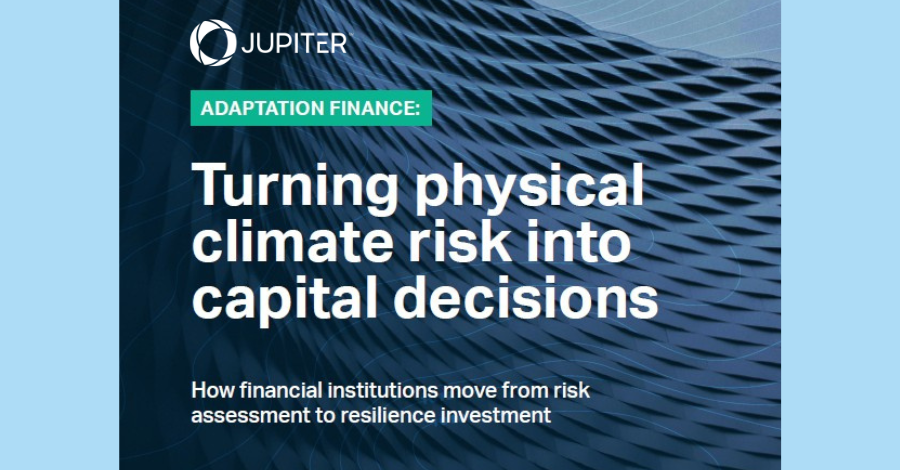
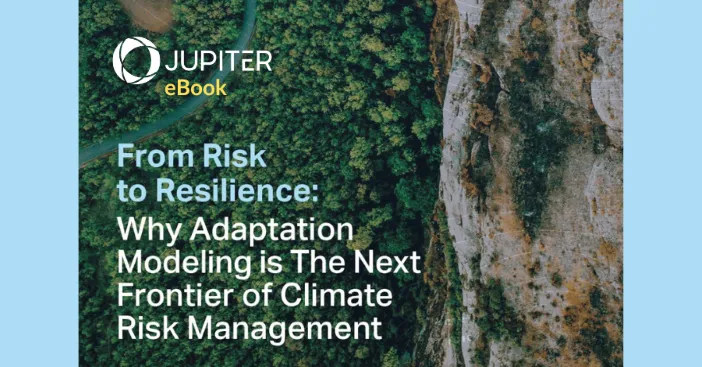
Adaptation Finance: Turning physical climate risk into capital decisions
This eBook explores how financial institutions are moving beyond risk identification and disclosure — and embedding forward-looking physical climate risk analytics into capital allocation decisions. You’ll see how leading banks, insurers, and asset managers are identifying when risk crosses financial thresholds, quantifying avoided loss and ROI, and translating resilience into defensible capital deployment.
Use Cases
Publications
.avif)
The Danger in Relying on FEMA Flood Maps for Risk Management

The Right Approaches to Climate Model Downscaling
.avif)
A Deluge of Risk...and a Looming Crisis
.avif)
Physical Climate Risks Present Significant Risk for Utility Grid Infrastructure
How Utilities Can Harness The Value Of Next-Generation Climate Risk Analytics For Grid Planning.

Grids Turn to High-Resolution Climate Analytics as a Strategic Tool for Resiliency Planning
As climate change causes more frequent and more extreme weather events, electric utilities worldwide are collaborating with private industry, academia, and stakeholders to improve grid resiliency.
Webinars
.webp)
[ON-DEMAND WEBINAR] Climate Risk as Financial Risk: Evidence from the U.S. Housing Market
U.S. housing—worth $54 trillion and 35% of household wealth—faces a growing climate-driven valuation bubble. This webinar explores how hazards like wind and wildfire are underpriced, why forward-looking climate models reveal hidden financial risk, and how these dynamics affect insurance, credit portfolios, and systemic stability. Climate risk is financial risk.

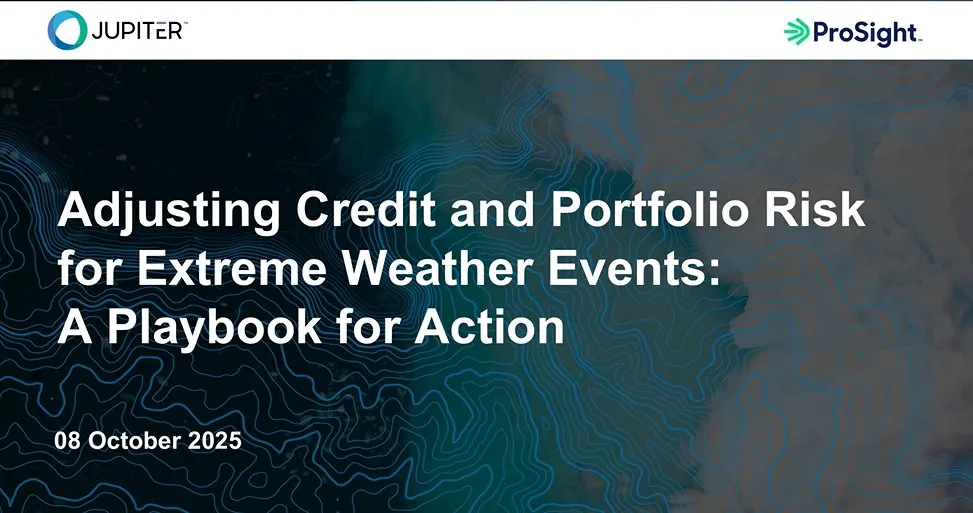
[ON-DEMAND] Adjusting Credit and Portfolio Risk Management for Extreme Weather Events - A Playbook for Action
This webinar brings together experts from Jupiter (Kevin Cei, Head of Solutions Architecture and Wahib Ghazni, Lead Economist, for a pragmatic look at how forward-looking extreme weather analytics are being integrated into financial workflows—from credit policy to portfolio resilience planning. Hosted by Jupiter and moderated by Thomas Gregory, Global Markets & Climate Risk Consultant at RMA/ProSight, this session will explore what makes climate risk “decision-grade,” which metrics matter most, and how climate-adjusted models are being applied in banking and asset management.

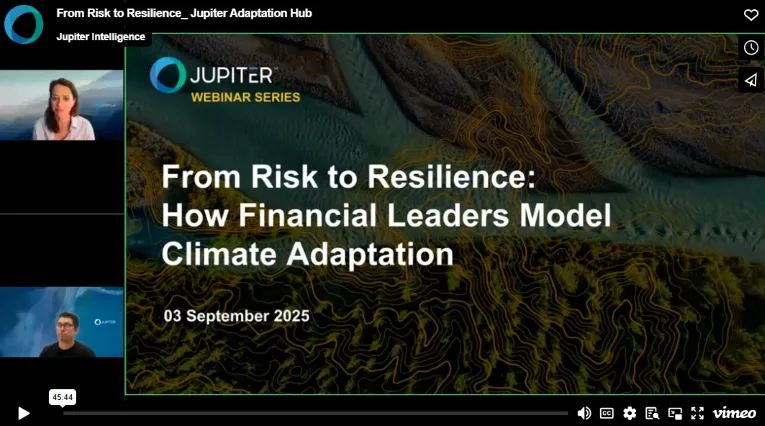
[ON-DEMAND WEBINAR] From Risk to Resilience: How Financial Leaders Model Climate Adaptation
See how Jupiter empowers banks, asset managers, and private equity firms to integrate climate adaptation and resilience into capital planning, portfolio strategy, and investment decisions. For financial institutions, climate risk is now a core business risk. To safeguard portfolios and deliver long-term value, leaders must move beyond risk awareness toward actionable climate adaptation.
.avif)
Bridging the Gap: How to Integrate Climate and Nature in Practice
In this engaging panel discussion, Elisa Seith, Senior Principal Solutions Consultant at Jupiter, joins experts from Natcap and WWF-UK to explore the critical need for integrating climate and nature strategies. Moderated by Sebastian Leape (Natcap), the conversation highlights why treating climate and nature as separate issues limits progress, the complexities of using integrated scenarios to assess risks, and how EU and UK policy landscapes are evolving to support a more holistic approach. A must-watch for organizations aiming to align sustainability goals with practical, science-based action.

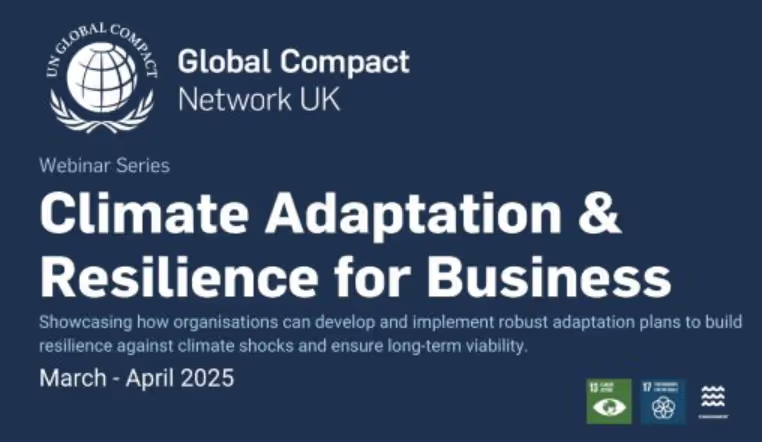
UN Global Compact, Network UK Climate Adaptation & Resilience for Business
Jupiter’s Sébastien Burgess recently joined industry leaders from AstraZeneca, Diageo, and SP Energy Networks for the UN Global Compact Network UK’s climate risk webinar series. The sessions offered practical guidance on conducting climate risk assessments and developing business continuity plans aligned with various climate scenarios. Participants explored strategies to safeguard infrastructure, operations, supply chains, and workforces from climate-related hazards. The series also highlighted key considerations for assessing exposure and vulnerability to climate risks—and how leading companies are integrating these insights into strategic planning and decision-making.

[ON-DEMAND WEBINAR] 2024’s Climate Risk Regulations Wrapped: How to Prepare for 2025 Disclosures
In this webinar, we will recap the significant changes that impacted the global regulatory landscape in 2024 and highlight key steps you need to take now to prepare for 2025 and beyond. Whether you are impacted by CSRD, TCFD, EU Taxonomy, ISSB, California’s SB 261, or other global or regional statutes, this webinar will provide essential insights to help your organization stay compliant and ahead of the curve as we approach 2025.

[ON-DEMAND WEBINAR] CSRD – Understanding Materiality & E1 Physical Risk Reporting: Office Hours with Live Q&A
Many companies are struggling with a clear interpretation of the ESRS guidelines as to how they relate to the double materiality assessment within CSRD guidelines. Especially when it comes to the assessment of physical risk, uncertainty is widespread on current sustainability teams. Watch our first “Office Hours” session with live Q&A where you’ll to hear some of the most pressing questions answered by physical climate risk reporting experts. Whether you're in the initial stages of your physical climate risk reporting or fine-tuning your strategy, this session is designed to provide you with actionable insights and guidance.

[ON-DEMAND] Commercial Risk Webinar] Climate risk: the importance of data
One of the difficulties that corporates face is gaining access to climate data, and how that climate data applies to their own risks, their own operations, and to their supply chain and customers. Data is required to estimate exposure and vulnerability of assets and people. Join Stuart Large, Business Development Director at Jupiter and Risto Schmid, Head Climate Resilience Switzerland at Zurich Resilience Solutions to find out the answers to these questions and more: 1) Climate risk assessment – what does it involve? 2) How can supply chains be assessed? and 3) How can climate risk data be used to manage the risk, and what sort of practical steps can be taken?

[ON-DEMAND] The evolving landscape of ESG reporting and climate risk
As the financial landscape evolves, Environmental Social and Governance (ESG) reporting has become a pivotal element in regulatory compliance and strategic financial planning. Experts from Wolters Kluwer (host), PwC and Jupiter's Elisa Seith, Principal Solutions Consultant and CSRD Lead, offer insights into effective ESG data collection strategies, and the influence of climate risk on reporting requirements.
.avif)
[ON-DEMAND] How to Become CSRD-Ready
More than 50,000 companies will be required to produce reporting on the major pillars of sustainability across ESG aspects. Many have already started to prepare. The set of European Sustainability Reporting Standards has introduced a double materiality assessment, the first framework that puts impact materiality at the same level of importance as financial materiality. This is one of the key topics covered in the webinar within the context of physical climate risk.

[ON-DEMAND] From Risk to Opportunity: Climate Resilience in the Financial Sector
Join experts from Jupiter and Axionable sharing their insights on the central role of climate resilience shaping the future of risk management and how climate data — mandated by the regulatory framework — can serve as a cornerstone for building a robust risk management strategy. Note: the webinar is in French and English.

[ON-DEMAND] How to safeguard investments and create value in a changing climate
In today's rapidly evolving financial landscape, climate risk analytics has emerged as a pivotal tool for asset management and private equity investment firms. With the escalating threats posed by climate change, asset managers and investors are now recognizing the critical importance of understanding their climate risk and integrating its potential effects into their projections and decision-making processes. By incorporating climate risk analytics into investment decisions, Wafra and others are not only future-proofing their portfolios but also catalyzing the transition to a more sustainable economy.

[ON-DEMAND] CSRD and Climate Risk Disclosures: How to Get Started Today
CSRD is a landmark regulation that will transform the way companies must report and stand their sustainability goals. The risks of climate change are an important part of this disclosure directive, so companies need to report on both transition and physical climate risk. The latter requires state-of-the-art climate science and hazard modeling at asset level resolution across a range of climate scenarios and time horizons. This webinar will help you understand the reporting requirements, make sense of them in your business context, and provide you with a comprehensive toolbox to get started today.
.webp)
[On-Demand Webinar] Climate Change and Asset Valuation: What Every Business Needs to Know
This webinar delves into the intricacies of market impacts stemming from climate change. Understanding and addressing climate risk is a crucial component of any well-rounded investment strategy. Taking climate risk into account before making investment decisions can lead to a more competitive and resilient organization. Ignoring it can result in detrimental financial consequences. Don’t miss out on this opportunity to understand how to quantify - and anticipate - the market impacts of climate change.

[On-Demand Webinar] How Will Global Climate Regulations Impact Your Business?
Climate-related disclosure mandates are rapidly evolving around the world today. While some industries have had some level of climate assessment in place, most industries have not and need to start preparing now. Whether you are impacted by EU Taxonomy requirements, upcoming SEC regulations, OFSI mandates, the California disclosure mandate (SB 261), or any other global regulatory statutes, watch this webinar to find out how to ease the burden later.

Managing Physical Climate Risks in Financial Services
Experts from Bain and Jupiter Intelligence detail how banks can deal with increasing climate-related challenges. Banks that take the right steps soon could improve their financial stability, customer retention, and compliance with emerging regulatory standards.

[On-Demand] How to Put a Price on Climate Risk & Future Proof Your Company
In this on-demand webinar, discover how to effectively incorporate high quality physical climate risk analytics into your management practices to set yourself up for successful, cost-effective climate adaptation and future-proof investments.

[On-Demand] Climate Metrics: Impact on Operations, Strategy and Regulatory Reporting
Kevin Cei, Head of Solutions Architecture at Jupiter and Bain & Company discuss sophisticated use of climate metrics for risk management, value creation, and business resiliency.

[On-Demand] Physical Climate Risk & the Effect on Your Value Chain
Value chains are complicated webs made up of suppliers, distributors, and customers. Every element is subject to physical climate risk impacts that can compound and lead to detrimental business outcomes.

[On-Demand] Climate Transformed
Rich Sorkin, Jupiter CEO, explores development in climate risk analytics and the data-driven approaches utilized by the world’s largest organizations.
.webp)
[On-Demand] Jupiter Intelligence TCFD Webinar: the importance of physical climate risk reporting
Jupiter Intelligence experts and Verdantix Analyst, Connor Taylor, deep dive into the TCFD pillars and the importance of physical climate risk reporting.
.webp)
Business Resilience Amid Increasing Climate Change Risk
Examine how climate change may affect different industries and provide best practices to help manage these risks.
.avif)
[ON-DEMAND] Is Your Business Ready for Climate Risk Regulations?
Understand how to assess and prepare for the evolving regulatory landscape

On-Demand Webinar | The vulnerability of supply chains to climate change

On-demand webinar | Climate Data Matters

Making Sense of the EU Taxonomy Mandate
A Clear-Sighted Guide to Identifying, Assessing, and Reporting Climate Risk Under the First Phase of the EU Taxonomy, from Jupiter Intelligence
.webp)
SEC Climate Risk Disclosures: What Today's Science Can Tell You
Jupiter's on-demand SEC Climate Risk Disclosure webinar explores the fundamental links between physical climate risk and its potential financial impacts on SEC registrants’ operations, business performance, and individual assets.
Videos

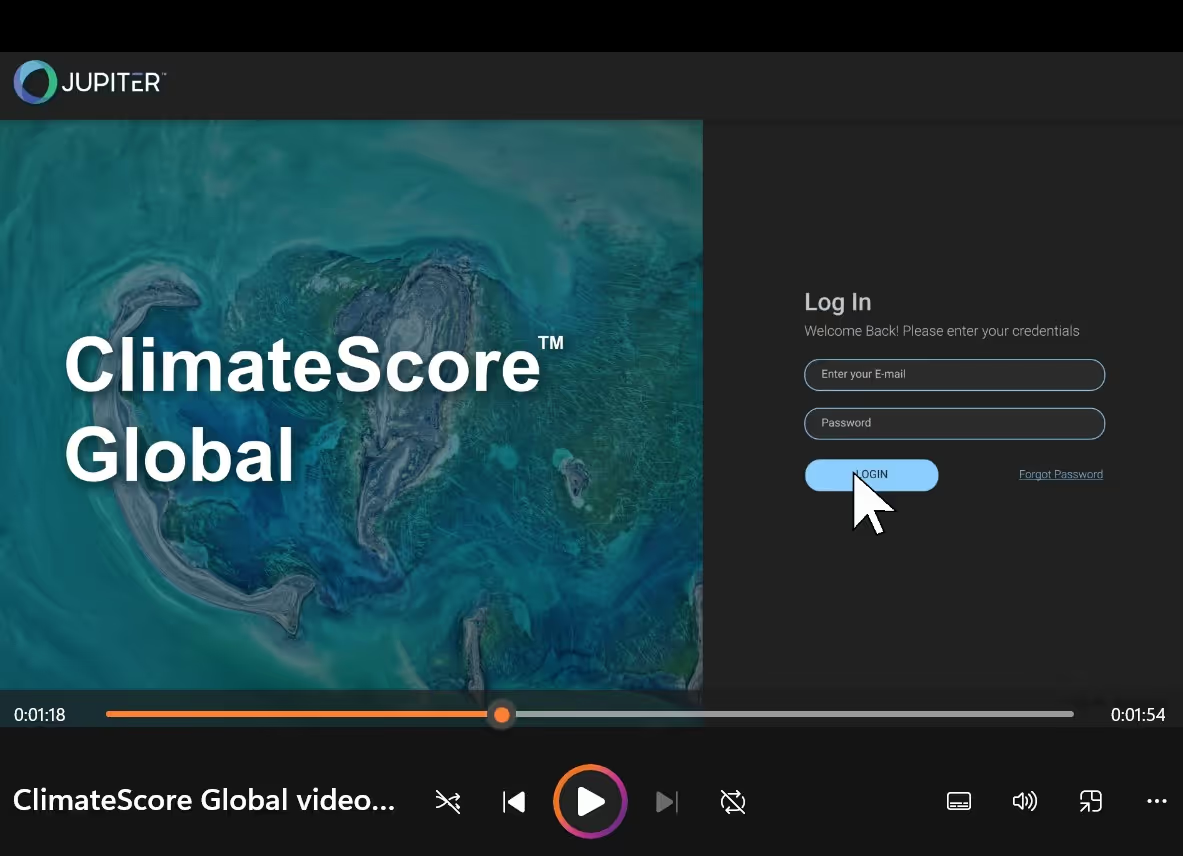
Jupiter Company Video
Hear directly from Jupiter leaders as they share how science, analytics, and deep industry expertise are helping companies understand the impact of climate change on their businesses, operations, and financial investments.

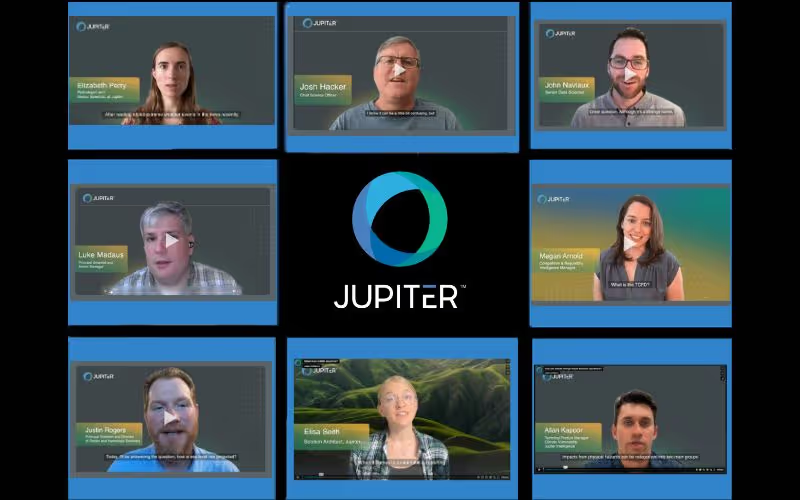
Jupiter Climate Insights
Jupiter experts answer your questions about climate science, global regulatory and disclosure issues, economic impact, and more.
Paired with a Jupiter expert that specializes in your industry, we will work together to assess your needs and determine the best-in-science physical climate risk analytics approach for your organization.
talk to an expert
.webp)
%20(1).webp)
%20tiny.avif)
.avif)
%20(1).webp)
.avif)