.webp)

Mother Nature has chosen to announce the London Climate Week in her own way. Less than a month after the hottest May day on record, a new national temperature record was set in France.
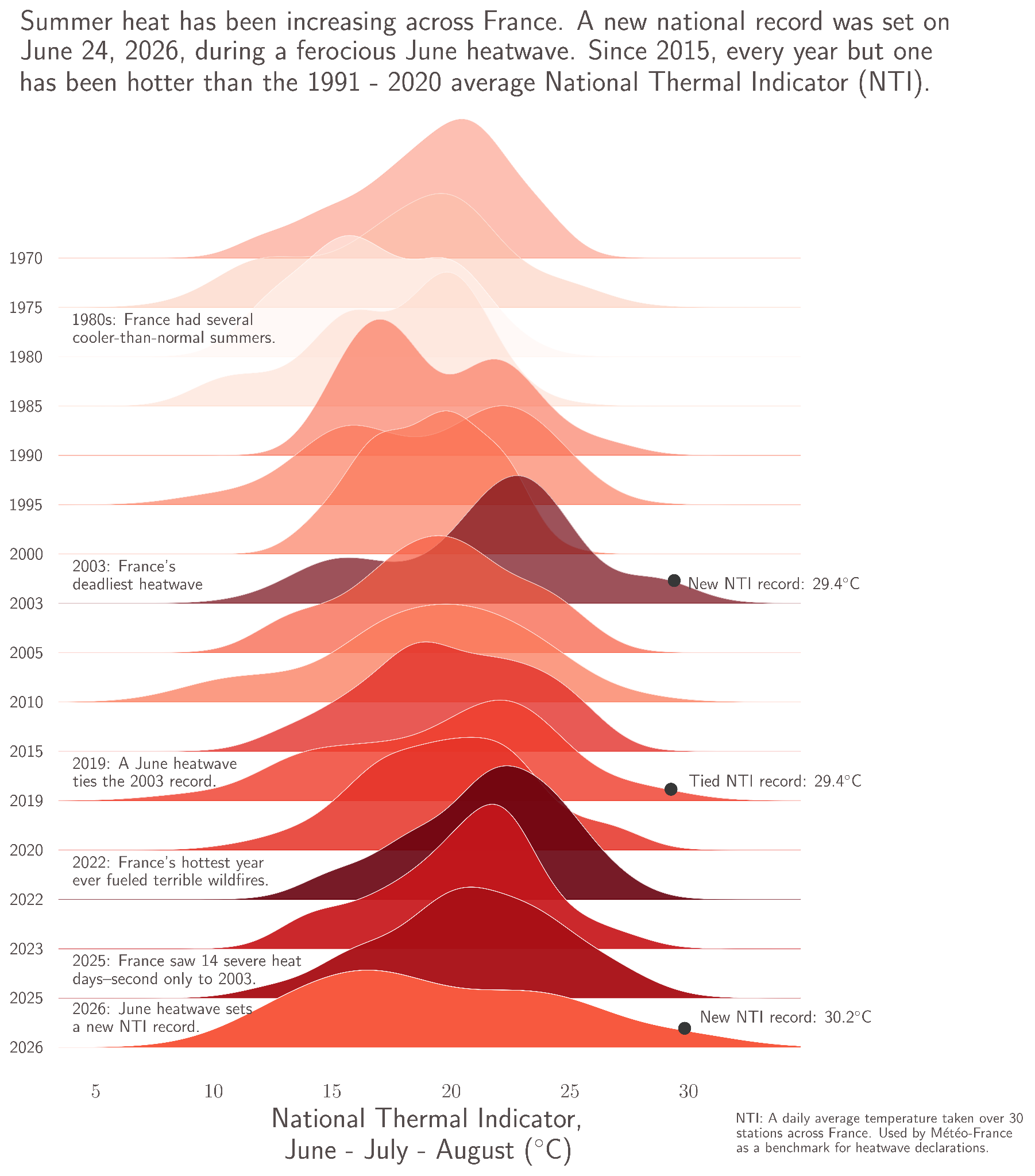
On both Tuesday and Wednesday, Météo-France’s National Thermal Indicator (NTI) set a new record, culminating in over 30°C. Wednesday’s new all-time high was more than 0.5°C higher than the previous record, which was set during the devastating August 2003 heatwave that claimed over 15,000 lives in France alone.
Across France, emergency room visits have shot up; workers have suffered in the heat; and power outages have rippled across the country, further exacerbating the impacts of the heat.
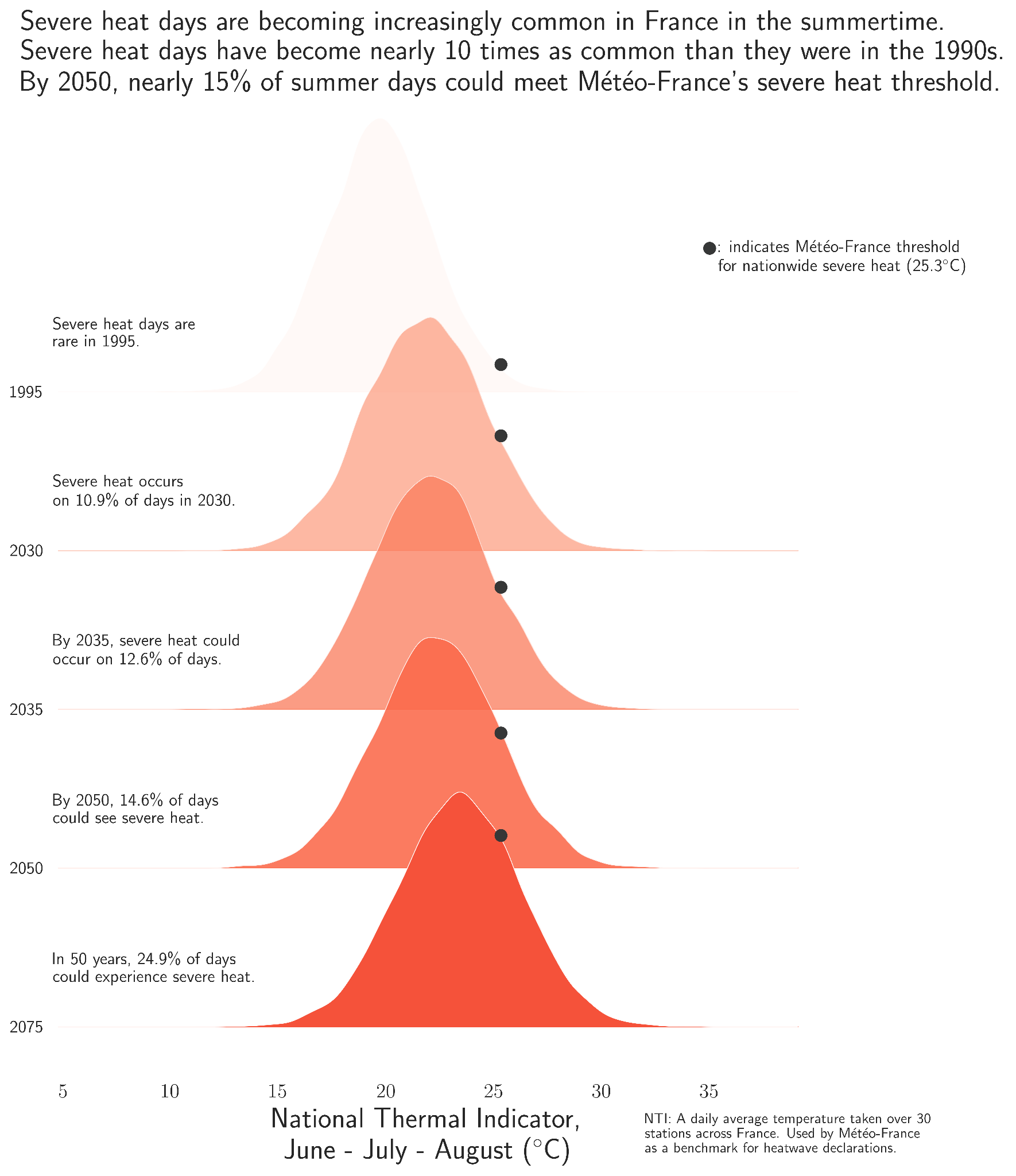
Jupiter scientists recreated the NTI with over 50 years of observations and 50 years of climate model projections from the 30 weather stations across metropolitan France that make up the NTI. They found that summertime temperatures in France have become substantially more extreme in recent years – and the heat will keep coming:
- In the last decade, the average number of days per year that has met or exceeded Météo-France’s severe heat level (defined as an NTI of at least 25.3°C) has more than doubled compared to previous decades;
- In just the next 10 years, the average number of severe heat days per year in France could triple compared to even the last 10 years;
- In 2025, an NTI of 30°C is approximately a 1 in 1000 year extreme heat event. By 2050, an NTI of 30°C is approximately a 1 in 250 year event – 4x likelier than it is today. By 2075, heat like this week’s would be nearly a 1 in 100 year event.
2026 has already seen 7 days meet or exceed the severe heat threshold, and it’s not even July.
On Thursday, more than 75% of the French population will be under the highest alerts for extreme heat. Extreme heat is the single biggest climate threat facing Europe – disrupting work, school, and transit; straining the energy grid; wreaking havoc on agriculture; and most importantly, placing immense stress on human bodies. The need for planning and adaptation in the face of extreme heat is clear – will countries rise to the occasion?
Interested in understanding how extreme heat could impact your assets, operations, or portfolio? Speak with Jupiter's experts to explore the risks and opportunities ahead.
